
Grocery shopping is an essential part of everyday life, but making the right choices at the store can have a significant impact on household spending, meal quality, and daily convenience. Whether shopping for a large family or purchasing ingredients for a few simple meals, having a practical approach can make the entire experience more organized and enjoyable.
From selecting fresh produce to comparing prices and planning meals ahead of time, small shopping habits can make a noticeable difference. Understanding how to shop efficiently also helps reduce unnecessary purchases and food waste. With thoughtful preparation, grocery shopping can become a simpler routine that supports both a balanced lifestyle and a manageable household budget.
Planning Your Grocery Shopping for a More Efficient Trip
A successful grocery trip often begins before entering the store. Taking a few minutes to review what is already available at home can prevent duplicate purchases and help identify the ingredients that are actually needed. Checking the refrigerator, freezer, and pantry provides a clearer picture of what should be included on the shopping list.
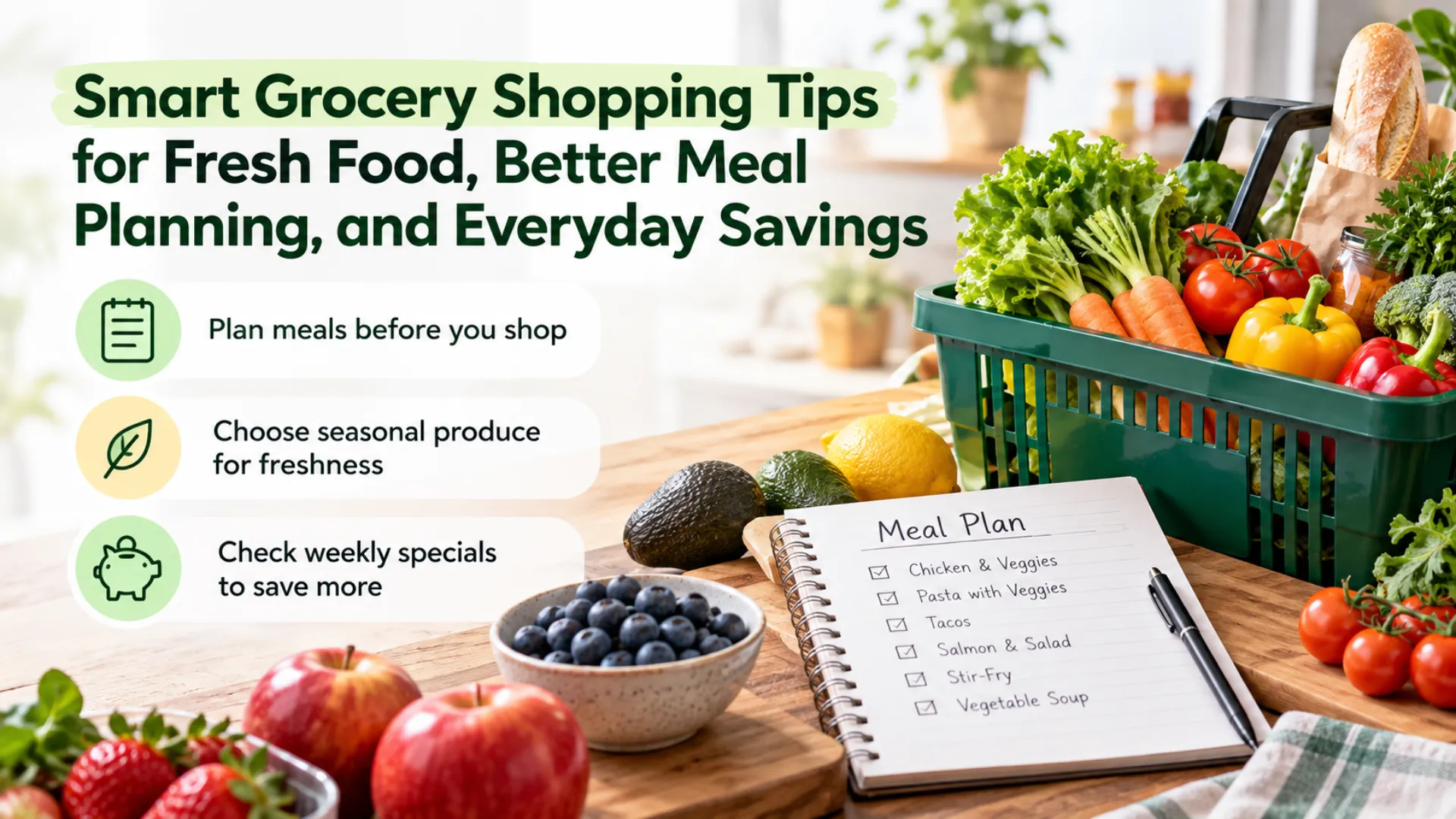
Meal planning is another useful strategy for making grocery shopping more efficient. Instead of purchasing ingredients without a specific purpose, shoppers can consider what they intend to prepare over the next several days. This approach makes it easier to select appropriate quantities and choose ingredients that can be used across multiple recipes.
Planning meals does not require creating a complicated schedule. Even a general idea of upcoming breakfasts, lunches, and dinners can provide enough direction for a more organized shopping trip. Flexible meal plans are especially helpful for busy households where schedules and food preferences may change throughout the week.
Creating a Practical Grocery List That Saves Time and Money
A well-prepared grocery list helps shoppers stay focused and avoid spending too much time deciding what to buy. Grouping items mentally by categories such as produce, meat, dairy, bakery, frozen food, and pantry essentials can also make it easier to navigate the store.
Budget awareness is an important part of preparing a shopping list. Reviewing regular household expenses and setting a reasonable grocery budget can help shoppers prioritize essential items before considering optional purchases. Comparing unit prices rather than relying only on package prices may also reveal better value, particularly when purchasing frequently used products.
Weekly grocery promotions can provide additional opportunities to manage spending. However, discounted products are only useful when they match actual household needs. Purchasing large quantities simply because an item is on sale may lead to waste if the food cannot be consumed or stored properly.
A thoughtful shopping list creates a balance between convenience, affordability, and flexibility, helping households maintain a steady supply of essential ingredients without unnecessary expenses.
Choosing Fresh Produce, Meat, and Everyday Grocery Essentials
Fresh ingredients play an important role in preparing satisfying meals at home. Fruits, vegetables, meat, dairy products, and bakery items are common parts of a grocery trip, and knowing what to look for can make shopping decisions easier.
When selecting fruits and vegetables, appearance, texture, and condition are useful factors to consider. Produce should generally be free from obvious signs of spoilage, while freshness indicators may differ depending on the variety. Some fruits are best purchased fully ripe, while others can continue ripening at home.
Shoppers should also consider how soon fresh ingredients will be used. Buying a combination of ready-to-eat produce and longer-lasting vegetables can provide more flexibility throughout the week. Proper storage after returning home is equally important for maintaining quality and reducing waste.
Meat and other refrigerated products require additional attention because they must be handled and stored at appropriate temperatures. Checking packaging condition, product dates, and storage instructions can help shoppers make informed choices. Refrigerated and frozen products are generally best selected toward the end of the shopping trip to limit the time they spend outside temperature-controlled storage.
Making the Most of Grocery Store Departments
Different grocery departments serve different household needs, and understanding their purpose can make meal preparation more convenient. Fresh produce departments provide ingredients for salads, soups, side dishes, and snacks, while meat departments offer options for home-cooked meals and family gatherings.
Deli sections can be useful for shoppers seeking convenient meal options that require less preparation. Depending on the store, these departments may offer sliced meats, cheeses, prepared foods, or ready-to-serve selections. Bakery departments provide another source of everyday essentials, including bread and other baked products that can accompany meals or be enjoyed separately.
Combining products from different departments can simplify meal planning. For example, fresh vegetables, a protein source, and pantry ingredients can be used together to create a complete dinner without requiring complicated preparation.
Convenience does not always mean purchasing fully prepared meals. Sometimes having a variety of fresh and packaged ingredients available in one place is enough to make home cooking easier and more practical.
Saving Money and Reducing Food Waste Through Better Shopping Habits
Managing grocery expenses involves more than searching for the lowest prices. Making thoughtful purchasing decisions and using ingredients efficiently can also contribute to long-term savings. One of the most common shopping challenges is buying more food than a household can reasonably consume before it loses freshness.
Understanding portion sizes and household eating habits can help prevent overbuying. Shoppers who regularly prepare meals at home may benefit from purchasing versatile ingredients that work in several dishes. Vegetables, grains, eggs, and other commonly used foods can often support different meal combinations throughout the week.
Comparing package sizes can also help shoppers make better financial decisions. Larger packages sometimes offer lower prices per unit, but they may not provide real savings when part of the product goes unused. Smaller households may find that purchasing appropriate quantities is more economical than choosing bulk packages that are difficult to finish.
Proper food storage is another important factor in reducing waste. Refrigerating perishable items promptly, following recommended storage guidelines, and keeping track of ingredients already available at home can help preserve quality. Organizing the refrigerator and pantry so older products remain visible may also encourage their use before newer purchases.
Building a Consistent and Budget-Friendly Grocery Routine
Developing a regular shopping routine can make everyday food planning feel less demanding. Some households prefer one larger weekly grocery trip, while others find that smaller visits throughout the week work better for their schedules and storage space.
The best approach depends on household size, available transportation, cooking habits, and personal preferences. Establishing a general routine helps shoppers become more familiar with the products they purchase frequently and the quantities they typically need.
Taking advantage of seasonal produce can also introduce variety into everyday meals. Fruits and vegetables that are in season may offer good quality and competitive prices, depending on local availability. Exploring different ingredients throughout the year can encourage more diverse meal preparation without requiring complicated recipes.
Over time, keeping track of grocery spending and noticing which foods are regularly consumed can help refine purchasing habits. Shoppers may discover that certain products are worth buying in larger quantities, while others are better purchased only when needed.
Grocery shopping becomes more manageable when planning, freshness, convenience, and value are considered together. Rather than focusing exclusively on discounts or buying the largest possible quantities, a balanced approach helps households select food that fits their needs and everyday routines.
By preparing shopping lists, choosing ingredients carefully, comparing prices, and storing groceries properly, shoppers can make each visit more productive. These simple habits support better meal preparation, reduce avoidable food waste, and make it easier to maintain a practical grocery budget while enjoying fresh and satisfying meals at home.